


Cuba Denounces U.S. Blockade Impacts with Anti-Imperialist Youth Parade
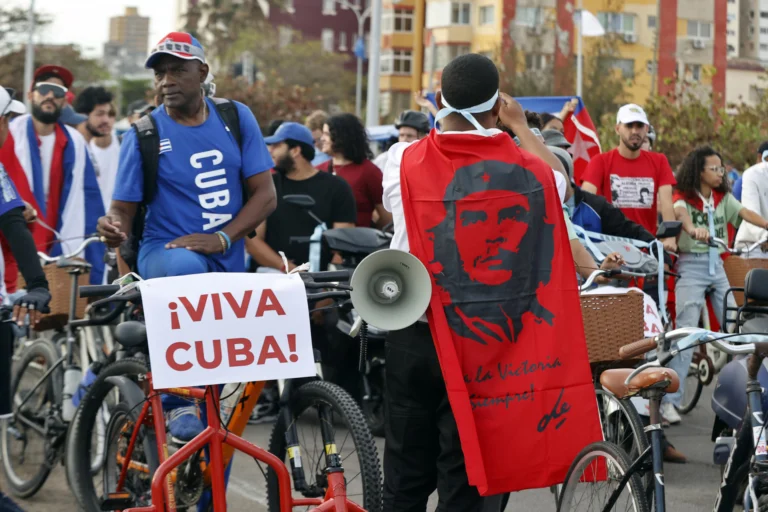
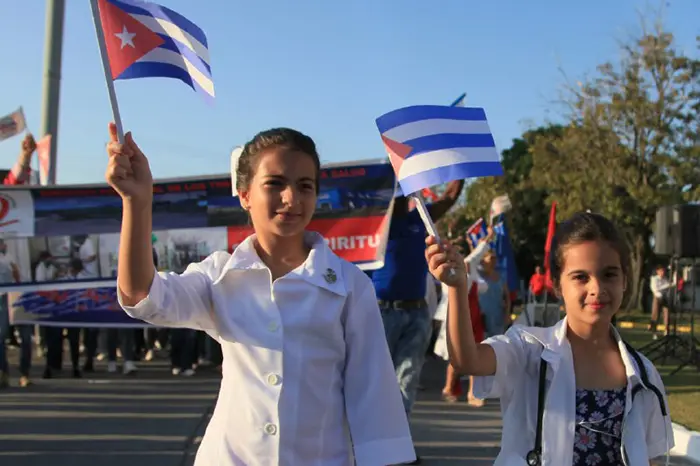
The Anti-imperialist Youth Parade “Here, with Fidel” reaffirmed the commitment of Cuban students and young workers to the continuity of the socialist project and national sovereignty. Photo: EFE.
April 2, 2026 Hour: 6:31 pm
🔗 Comparte este artículo
Cuba’s President Miguel Díaz-Canel joined today a youth parade in Havana denouncing the U.S. blockade, as thousands of young people reaffirmed their commitment to socialism and national sovereignty against foreign pressures.
Thousands of Cuban young people on March 2 attended the “Here, with Fidel” Anti-Imperialist Youth Parade in Havana, an event organized by the Union of Young Communists (UJC, in Spanish) and the José Martí Pioneer Organization (OPJM, in Spanish) to denounce the United States’ intensified blockade and reaffirm the Cuban youth’s commitment to the socialist project and national sovereignty.
The demonstration, conducted on bicycles, skateboards, and electric motorcycles through the streets of the country’s capital, formed part of the ongoing celebrations marking the anniversaries of both mass youth organizations and underscored the resilience and unity of Cuban society in the face of external pressures.
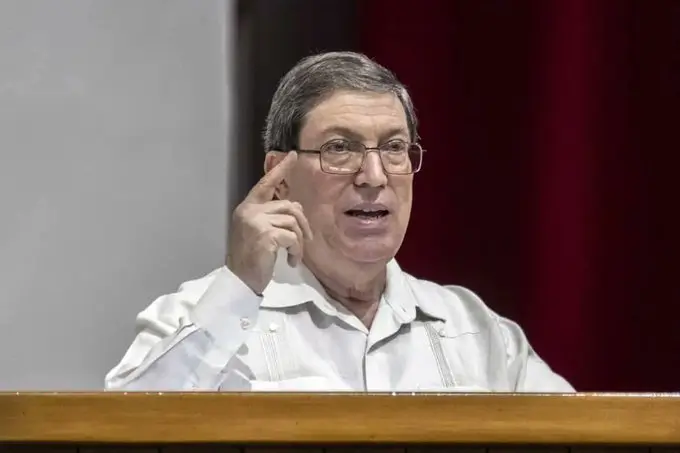
Accompanying President Díaz-Canel were high-ranking officials including the Prime Minister of the Antilles nation, Manuel Marrero; Foreign Minister Bruno Rodríguez; and Roberto Morales, the Organization Secretary of the Central Committee of the Communist Party of Cuba.
The parade was not merely a celebration but a clear political statement against imperialist U.S. policies. Participants vehemently reaffirmed their unwavering commitment to the continuity of the socialist project and the defense of national sovereignty. This collective declaration underscored Cuba’s steadfast resolve to maintain its independent path despite decades of economic sanctions and political pressure from Washington.
During the rally, members of the pioneer organization bravely exposed the direct and detrimental impacts of the unilateral siege on daily life and the Cuban educational system. Alan Díaz, an eighth-grade student from the Rubén Bravo Basic Secondary School, eloquently denounced how pervasive energy shortages and the persistent lack of school materials significantly impede learning in classrooms across the nation.
“In schools, energy shortages limit our classes, we cannot project the audiovisual aids that help us so much, and even books and materials are delayed in reaching our hands because they cannot be printed”, Díaz declared, humanizing the abstract concept of the blockade, illustrating its tangible effects on the lives of Cuban children.
For her part, Jessica Izaguirre, a student at the “Martínez Tamayo Brothers” Pre-university Vocational Institute, issued a compelling call to actively combat external hostility. She emphasized the critical importance of strengthening revolutionary culture and ideas as a primary defense mechanism, stressing that cultural and intellectual development are integral to national resilience against foreign interference.
In a similar vein, Meyvis Estévez, the First Secretary of the Union of Young Communists, unequivocally emphasized that Cuba’s dignity is “non-negotiable” in the face of persistent pressures from the United States against the country.
The youth leader further denounced that the energy restrictions, directly resulting from the blockade, have significantly increased waiting lists for surgical interventions, disproportionately affecting child patients in specialized centers such as the William Soler Pediatric Cardiocenter. In this crucial institution, dedicated efforts to save lives are continually hampered by the severe lack of pharmaceuticals and medical supplies, a direct consequence of the economic pressure policies. This stark reality underscores the humanitarian impact of the U.S. sanctions.
The Anti-Imperialist Youth Parade was a powerful manifestation of Cuba’s unwavering resolve and a call for international solidarity against unjust economic sanctions.
Author: Laura V. Mor
Source: Cuban Presidency